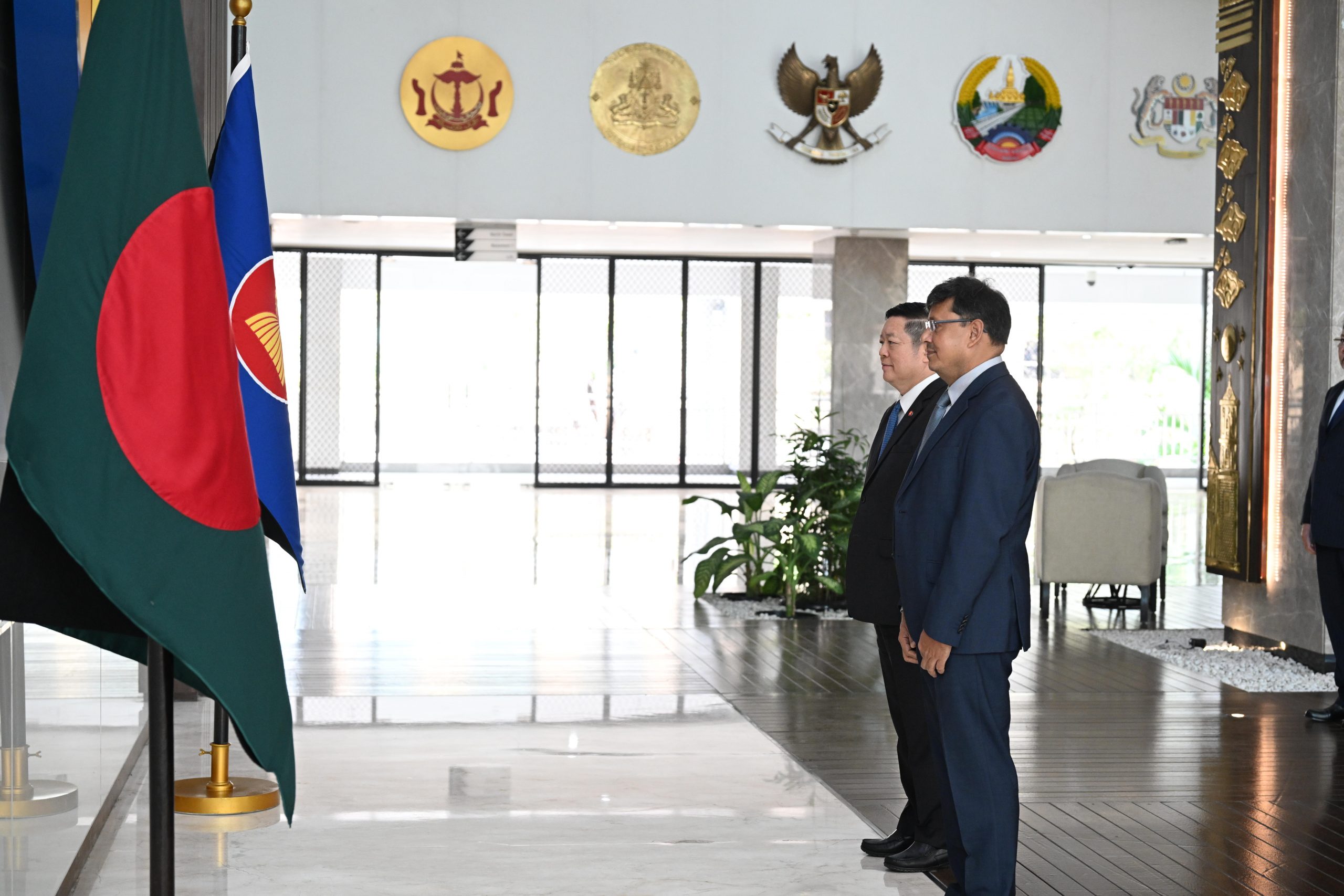
New Bangaldesh Ambassador to ASEAN meets Secretary-General of the bloc.
[ by Bahauddin Foizee ]
As the geopolitical landscape of Asia evolves, Bangladesh finds itself at a crossroads, poised to enhance its diplomatic and economic ties with the Association of Southeast Asian Nations (ASEAN). This move is not only strategically beneficial but also vital for the country’s long-term growth and stability.
Economic Opportunities
One of the most compelling reasons for Bangladesh to strengthen ties with ASEAN states is the vast economic potential these relationships hold. ASEAN, comprising ten dynamic economies, is a significant player in global trade. By enhancing cooperation, Bangladesh can tap into new markets for its ready-made garments, pharmaceuticals, and agricultural products. With the right agreements, Bangladesh could see a surge in trade, diversifying its export destinations and reducing dependency on traditional markets.
Regional Stability
Bangladesh’s geographical location makes it a natural bridge between South Asia and Southeast Asia. Strengthening ties with ASEAN can enhance regional stability, creating a buffer against external pressures and fostering a collaborative approach to common challenges, such as climate change and disaster management. ASEAN’s emphasis on peaceful dialogue and multilateralism can provide a framework for Bangladesh to engage with neighboring countries and address transnational issues effectively.
Cultural Exchange and People-to-People Connectivity
Cultural ties between Bangladesh and ASEAN countries are rich and diverse, rooted in shared history and values. By promoting cultural exchanges, educational partnerships, and tourism, Bangladesh can foster mutual understanding and respect. This people-to-people connectivity will not only enrich the cultural fabric of both regions but also create a supportive environment for trade and investment.
Technological Collaboration
In an era dominated by rapid technological advancement, collaboration with ASEAN can help Bangladesh leapfrog into the digital age. Many ASEAN nations have made significant strides in technology and innovation. By establishing partnerships in tech, Bangladesh can benefit from knowledge transfer, investment in digital infrastructure, and joint ventures that can boost its tech ecosystem.Enhanced Security Cooperation
The rise of non-traditional security threats, such as cybercrime, human trafficking, and maritime security, calls for a coordinated approach. Strengthening ties with ASEAN allows Bangladesh to participate in security dialogues and initiatives that can enhance its national security framework. Collaborative efforts in intelligence sharing and capacity building will enable Bangladesh to tackle these challenges more effectively.
Conclusion
As Bangladesh seeks to carve a more prominent role in regional and global affairs, strengthening ties with ASEAN is not merely an option; it is a necessity. By forging deeper economic, cultural, and security partnerships, Bangladesh can position itself as a pivotal player in the ASEAN landscape. This strategic alignment will not only bolster its economic prospects but also contribute to a more stable, secure, and prosperous future for both Bangladesh and the ASEAN region.