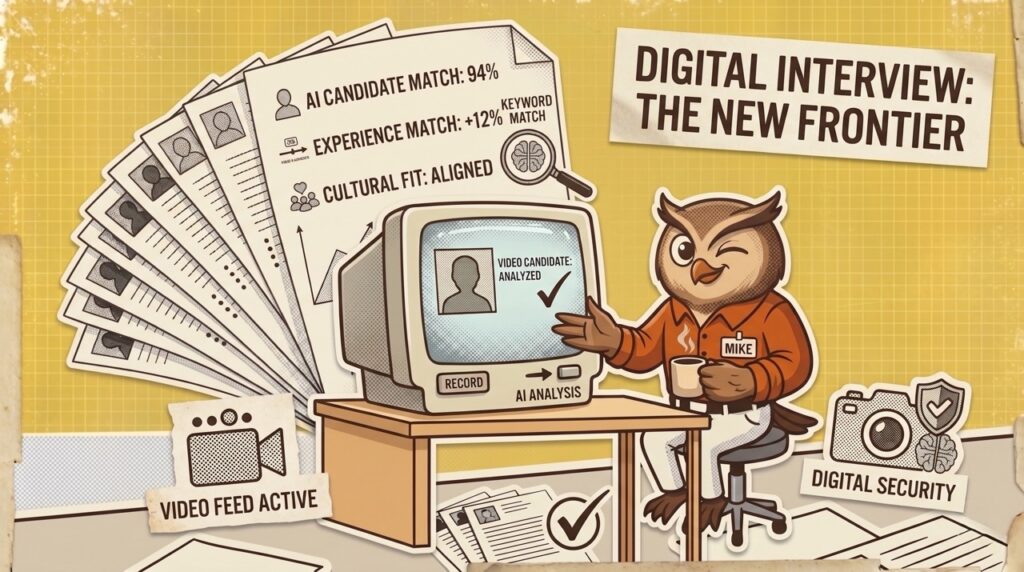
Most small business owners have never been taught how to interview. You probably default to a face-to-face conversation, loosely structured, driven by whatever questions come to mind on the day. It feels natural. It also produces wildly inconsistent results.
When you start looking for better ways to evaluate candidates without dedicating forty hours a week to screening, you eventually encounter software solutions. At this point, you have to define what is a digital interview in practical terms. The concept gets thrown around by enterprise HR vendors, but it often lacks a precise definition for lean teams. It is not just a video call. It is a structured method of assessing candidates asynchronously or through AI-assisted platforms, designed to standardise the screening stage.
For a small team hiring five people a year, understanding what is a digital interview changes the operational math. It separates the assessment of skills from the logistical friction of calendar coordination. You are no longer trading your productive hours for early-stage candidate screening. You are building a system.
The traditional hiring playbook was written for large corporations with dedicated recruitment departments. When an enterprise company runs a five-stage interview process, they have the operational capacity to absorb the administrative load. When a ten-person company does it, the founder stops doing their actual job. The business stalls because the operator is stuck in back-to-back introductory calls.
The Structural Mismatch in Small Business Hiring
This structural mismatch is why lean teams struggle to hire well. You need the rigour of a corporate process without the overhead. When you rely entirely on live conversations for first-round screening, you introduce a bottleneck.
A live phone screen takes thirty minutes. If you have twenty viable applicants, that is ten hours of pure conversation. Add the time spent emailing back and forth to find calendar slots, reviewing notes, and dealing with no-shows, and you are losing nearly two full working days just to narrow the field. It works until it doesn’t. Until a week goes by and you realise you have ignored your existing clients to talk to candidates who were never a fit to begin with.
This is where the format has to change. When identifying what is a digital interview solving for, the most immediate answer is time. But time is only the surface problem. The real issue is consistency.
Research published in Harvard Business Review demonstrates that structured interviews have significantly higher predictive validity than unstructured ones. If you are making decisions based primarily on how much you enjoyed talking to someone, you are not interviewing, you are socialising. That is not a criticism of the candidate. It is a limitation of the method. Human beings are easily swayed by shared interests, similar backgrounds, and general charisma. These traits are pleasant, but they rarely predict performance in the actual role.
By standardising the input, you protect the business from your own cognitive bias. Every candidate gets the exact same questions, in the exact same format, with the exact same time limits. This level of consistency is virtually impossible to achieve in a live conversation where tangents inevitably occur. Relying heavily on manual screening means traditional interview frameworks often fail lean teams precisely because they require the interviewer to maintain perfect, unchanging discipline across dozens of conversations.
Defining the Terms: What Is a Digital Interview in Practice
To accurately define what is a digital interview, you have to separate it from remote work communication software. Conducting a live interview over a video conferencing link is just a traditional interview delivered through a screen. It carries all the same flaws as sitting across a desk from someone, with the added friction of internet latency and audio delays.
A true digital assessment operates independently of your calendar. It is inherently asynchronous. When candidates encounter these platforms, they are usually trying to figure out if they will be talking to a human in real time or interacting with software. For small businesses, the asynchronous platform is where the value lies.
There are two primary formats that lean operators rely on.
The first is the one-way recorded video. In this format, the candidate logs into a secure platform, reads or watches a pre-recorded question, and records their verbal response within a strict time limit. You then review these recordings at your convenience. Perhaps you watch them on a Tuesday evening or a Sunday morning. The candidate gets a fair, uninterrupted opportunity to present their thinking without the pressure of finding a mutual forty-minute window during standard business hours. It is highly effective for assessing baseline competence and the ability to articulate complex ideas clearly.
The second format is the AI-assisted evaluation. This is where the technology actually changes the quality of the hire. An AI-assisted assessment goes far beyond simply capturing a video recording. It uses conversational AI to administer structured screening questions, probe for specific behavioural indicators, and evaluate the text of the responses against a predefined rubric.
If someone asks you what is a digital interview doing that a human cannot, the answer is applying an objective scoring matrix to every single candidate without fatigue. A human interviewer gets tired after the fourth call of the day. They start missing subtle details. They grade the fifth candidate more harshly than the first simply because they want to go to lunch. An automated evaluation system applies the exact same standard to candidate number one and candidate number fifty.
When determining how to implement this and selecting the right ai-assisted evaluation tools for your business, the focus should always be on this standardisation. You are not buying software to replace human judgement. You are buying software to ensure human judgement is applied only to candidates who have already demonstrated they possess the required skills.
The Economics of the First-Round Screen
Enterprise companies adopt new hiring technology to process ten thousand applications efficiently. Small businesses adopt it to process fifty applications accurately. The motivations are entirely different, even if the tools look similar.
When you only hire two or three people a year, every single hire is critical infrastructure. A bad hire in a two-hundred-person company is an HR problem that gets absorbed by the wider department. A bad hire in a five-person company threatens the survival of the business. You cannot afford to get it wrong, yet you have fewer resources and less margin for error to get it right.
This is exactly why understanding what is a digital interview matters more for lean operators than it does for corporate recruiters. You do not have the luxury of an extended probationary period to see if someone works out. You need high signal early in the process.
The traditional method of parsing applications introduces massive inefficiencies. Often, first-stage filtering relies heavily on cv formatting rather than competence. You end up advancing candidates who paid for a professional resume writer, while rejecting capable operators who happen to be bad at graphic design. This is a terrible way to build a team.
Data from the Bureau of Labor Statistics indicates that the time required to fill open roles continues to stretch for small employers, largely due to these operational bottlenecks. By moving the initial screening stage to a structured digital format, you bypass the resume formatting bias entirely. You measure what candidates actually know, not just what they claim on a piece of paper.
Before you can measure success, you need to establish what is a digital interview going to replace in your current pipeline. It should replace the thirty-minute introductory call. It should replace the stack of printed resumes on your desk. It should not replace the final conversation where you discuss mutual expectations and compensation.
When to Deploy Asynchronous Formats
Not every stage of the hiring process should be automated. If you replace the final interview with software, you will lose exceptional candidates who want to know who they are working for. The objective is not to remove humans from hiring. It is to use human interaction only where it adds genuine value.
So, where does this fit? To fully grasp what is a digital interview used for, look at the top of your hiring funnel.
First-stage screening is the optimal deployment zone. Instead of running fifteen individual phone screens that might yield three viable candidates, you invite all fifteen to complete a digital assessment. You review the structured output, transcripts, and scorecards generated by the platform. You then spend your valuable time talking only to the three who actually meet your baseline criteria.
This approach radically alters your calendar. You are no longer dreading Tuesday because it is filled with screening calls. You are looking forward to reviewing the scorecards on Wednesday morning. It is a fundamental shift from reactive calendar management to proactive talent assessment.
It also protects the candidate. Traditional screening methods force candidates to take time off work, find a quiet room, and hope the interviewer calls on time. A digital format allows them to complete the assessment on their own terms, in an environment where they feel comfortable. It respects their time just as much as it respects yours.
Industry analysis has shown that lean teams adopting automated screening reduce their time-to-hire significantly simply by eliminating scheduling delays. When you remove the need for two busy people to find a matching half-hour slot, the process moves faster. The best candidates are off the market in ten days. If you take fourteen days just to schedule a phone screen, you will only ever hire the people nobody else wanted.
The Mechanics of What a Digital Interview is and How to Build One
If you decide to implement this method, the setup determines the outcome. A poorly designed asynchronous process is worse than a bad phone screen because it alienates good people at scale.
You cannot just ask candidates to record themselves answering generic questions. You have to design the interaction. The core components of an automated assessment rely heavily on the quality of the prompts you create.
Here is how to build it properly.
First, define the core competencies. Before you record a single prompt or write a single instruction, you need to know exactly what behaviour indicates success in the specific role. If you are hiring a customer support manager, you are looking for de-escalation skills and emotional regulation. If you are hiring a backend developer, you are looking for logical sequencing and problem-solving methodology.
Second, write scenario-based questions. “Tell me about yourself” is a useless prompt in any format, but it is particularly damaging in an asynchronous setting. It produces rambling, unfocused answers. Instead, provide a concrete workplace scenario. “A key client emails you demanding a full refund for a service delay that was caused by a third-party vendor. Walk me through exactly how you respond to that email, step by step.” This forces the candidate to demonstrate their judgement, not just recite their work history.
Third, set hard constraints. Give candidates exactly two minutes to read the scenario and exactly three minutes to record their response. Constraints force clarity. People who actually know what they are doing can explain it succinctly. People who are guessing will fill the time with filler words and circular logic. The constraint is a filter in itself.
Fourth, use objective scorecards. This is the most critical step. Every single person reviewing the interview must use the exact same criteria. Did the candidate acknowledge the client’s frustration? Did they hold the line on the refund policy? Did they propose a practical alternative? Rate these specific elements on a numerical scale. If you skip this step, you are just watching videos and trusting your gut all over again. You have digitised your bias, not removed it.
For small businesses looking to standardise this exact process, platforms like HireMike handle the infrastructure natively. The system delivers structured first-stage screening, evaluates responses based on your specific criteria, and provides the consistent scorecards you need to make evidence-based decisions. It removes the guesswork from the assessment phase without requiring a massive enterprise software budget.
Addressing the Candidate Experience
One of the most common concerns founders have is whether an asynchronous format will drive candidates away. They worry that highly skilled professionals will refuse to talk to a machine.
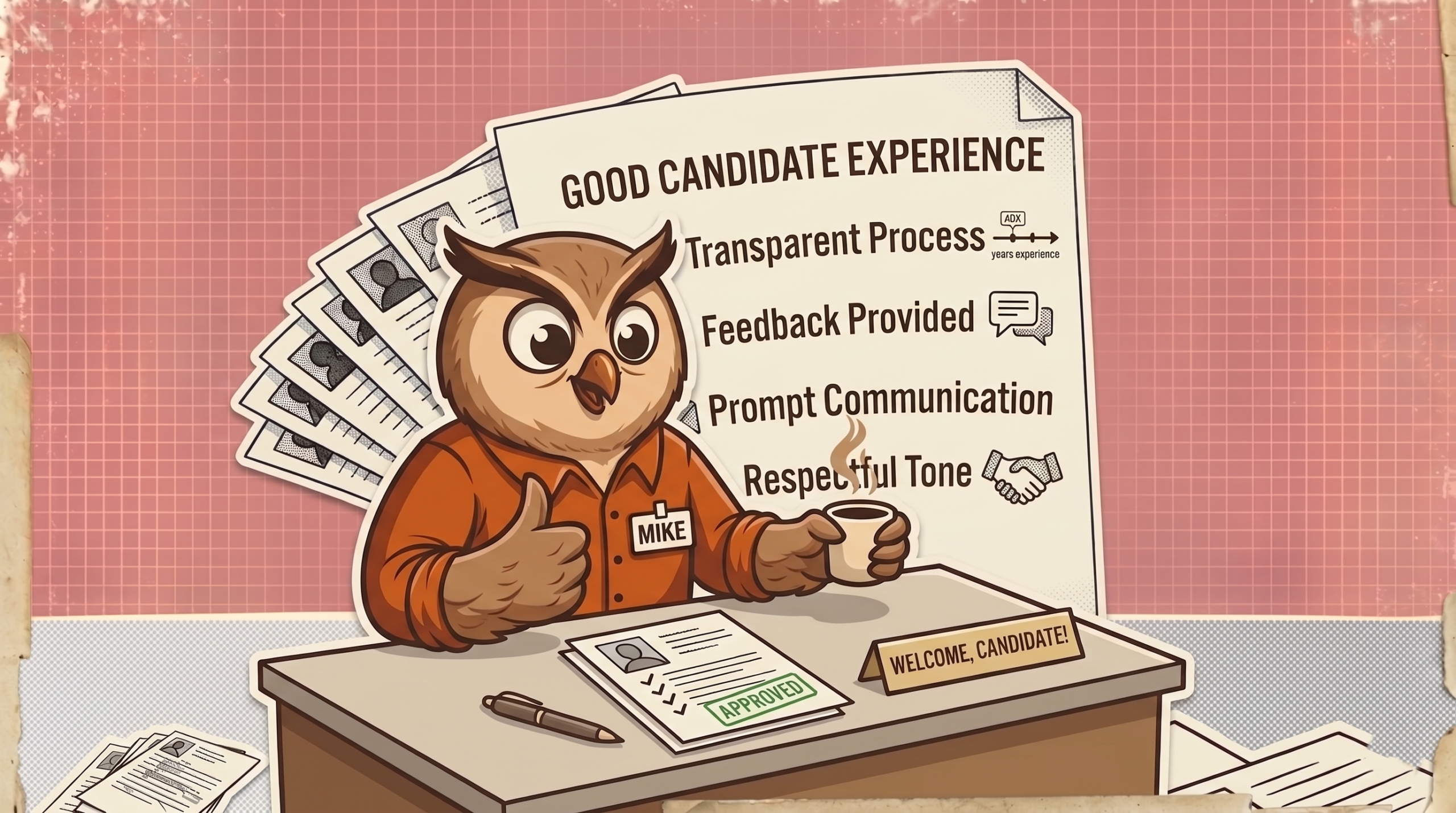
This is a valid concern, but it usually stems from bad execution. Candidates do not hate digital assessments. They hate arbitrary hoops to jump through. They hate spending two hours recording videos for a company that never bothers to send a rejection email.
If you are evaluating what is a digital interview meant to fix from the candidate’s perspective, it is the black hole of the application process. When a candidate submits a resume, they usually hear nothing for weeks. When they complete a well-designed digital assessment, they know they have at least been given a fair chance to demonstrate their ability.
Transparency is the antidote to friction. You have to explain to candidates why the process is structured this way. A simple, plain-spoken message at the beginning of the process changes the entirely dynamic.
“We use structured digital interviews for our first round to ensure every single candidate gets the exact same questions and a fair evaluation, regardless of what university they attended or who they know. It allows us to focus entirely on your capability.”
That is not corporate jargon. It is an honest explanation of your methodology. It tells the candidate that you are professional and that your organisation values fairness over familiarity. The candidates who refuse to participate after reading that explanation are usually the ones who rely heavily on charm rather than competence to get through interviews. You are better off without them.
The Mistakes Small Businesses Keep Making
The transition to digital evaluation usually fails in one of two distinct ways.
First, small businesses try to replicate the unstructured conversational interview on a digital platform. They ask generic, open-ended questions and evaluate candidates based on eye contact, background lighting, and perceived enthusiasm. They honestly miss the point entirely. Imposing a digital medium on an unstructured process just creates a bad digital process. It isolates the candidate without providing any useful data to the employer.
Second, founders hide behind the technology. They use the platform as a wall between themselves and the applicant pool. They fail to communicate timelines, they do not provide context for the questions, and they ghost the candidates who do not make the cut. Automation is meant to handle the administration of hiring, not the basic decency of human communication.
When you grasp the reality of what is a digital interview, it acts as a filter for competence. It is not a test of how well someone performs on camera. It is a structured environment designed to capture evidence of their ability to do the job.
If you treat it like a test of charisma, you will hire television presenters instead of capable operators. If you treat it like a rigorous assessment of practical skills, you will build a remarkably competent team.
Scaling the Process as You Grow
A process that works for your third hire should ideally work for your thirtieth. The beauty of standardising your screening stage is that the system scales effortlessly.
When your business expands and you need to hire three people at once, you do not have to clear your entire calendar. You simply deploy the same structured assessment you used previously. The platform administers the questions, captures the data, and presents you with the scorecards.
Your role shifts from an interviewer to an editor. You review the evidence. You look at the transcripts. You make decisions based on documented performance rather than a vague memory of a conversation you had three days ago.
This is how lean businesses modernise their operations. They do not throw human hours at administrative problems. They build systems that capture accurate data, and they use their human capital to make the final, nuanced decisions that actually matter.
The Bottom Line
The answer isn’t to overhaul your entire hiring process overnight. It’s to start matching your approach deliberately to the objectives of each stage. A digital interview is simply a tool for standardising the initial evaluation of capability. When you understand what is a digital interview and deploy it correctly, you stop wasting hours on low-value phone screens. You reserve your time for the candidates who have already proven they can do the work.