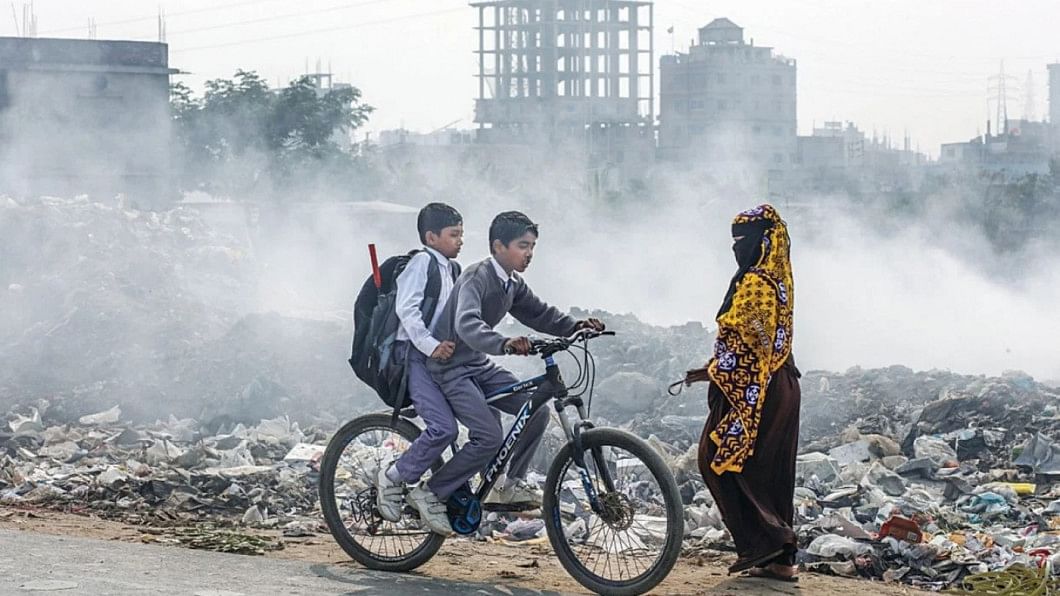
Dhaka, Bangladesh.
[ by Bahauddin Foizee ]
Bangladesh, a country blessed with natural beauty and resources, is currently facing a severe crisis of air pollution. The air quality in cities like Dhaka and other industrial areas is deteriorating at an alarming rate.
According to reports from the World Health Organization (WHO) and various environmental agencies, Bangladesh ranks among the worst in the world in terms of air pollution. This issue is not only a threat to the environment but also to public health, the economy and overall development.
Major Causes of Air Pollution
Several factors contribute to air pollution in Bangladesh. The number of vehicles in Dhaka and other major cities is increasing rapidly. Emissions from these vehicles, especially older and poorly maintained ones, are a major source of air pollution.
The rapid industrialization in Bangladesh has also led to increased air pollution. Many industries lack environmentally friendly technologies. Emissions from brick kilns, tanneries and chemical factories are significant contributors.
Extensive construction work in urban areas releases large amounts of dust into the air. This dust, when inhaled, causes various respiratory diseases. Furthermore, the use of chemical fertilizers and pesticides in agriculture contributes to air pollution. Additionally, burning crop residues releases harmful smoke into the atmosphere. Burning of plastic and other waste materials in both urban and rural areas releases toxic gases, further exacerbating air pollution.
Impacts of Air Pollution
The effects of air pollution are widespread and long-lasting. Air pollution leads to respiratory problems, asthma, lung cancer, heart diseases and strokes. Children and the elderly are particularly vulnerable.
Air pollution also increases the concentration of carbon dioxide and other greenhouse gases in the atmosphere, accelerating climate change. It also leads to acid rain, which contaminates soil and water. Furthermore, the health costs associated with air pollution are significant. Additionally, it negatively impacts agricultural and industrial productivity.
Measures to Combat Air Pollution
Addressing air pollution requires concerted efforts from the government, private sector and citizens. Industries and vehicles should use environmentally friendly technologies. Advanced technologies in brick kilns can significantly reduce emissions.
The government must enact and strictly enforce laws and policies to control air pollution. Alongside laws and policies, public awareness campaigns about the harmful effects of air pollution should be conducted through schools, colleges and media.
Planting more trees and preserving green spaces can help reduce air pollution. Trees absorb carbon dioxide and provide oxygen. In addition, enhancing and promoting public transportation systems can reduce vehicle emissions.
Conclusion
Air pollution is a significant challenge for Bangladesh. Solving this problem requires collective action from the government, private organizations and citizens. Only through united efforts can we overcome this crisis. Protecting the environment and ensuring a healthy and beautiful Bangladesh for future generations requires immediate action.